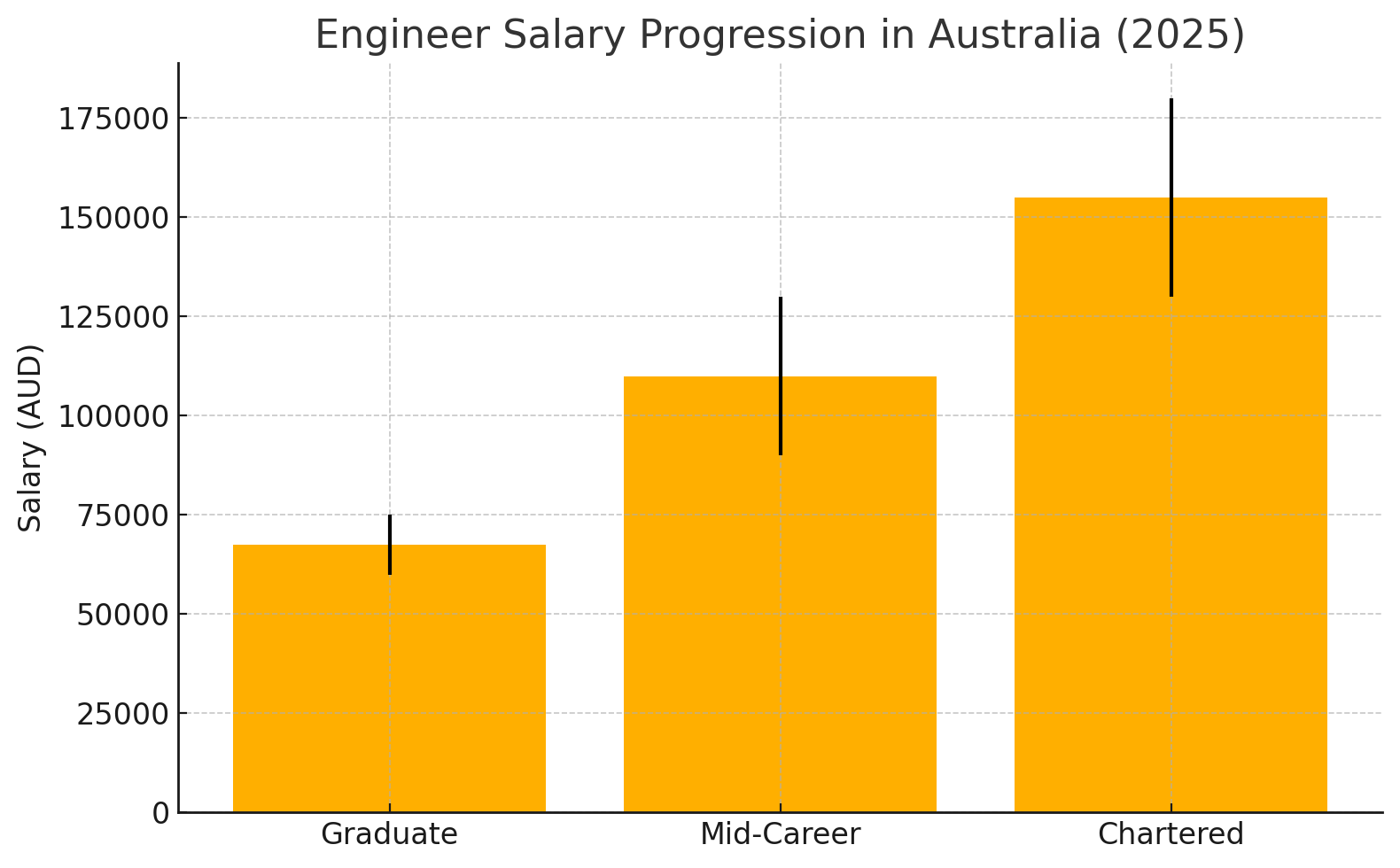
Engineering continues to be one of the most stable and well-paid career paths in Australia, but each discipline has its own earning trends. Below is a practical breakdown of engineer salary differences in 2025, covering Mechanical, Civil and Electrical roles from graduate to chartered level. These insights help job-seekers understand real opportunities — and employers set competitive pay.
Mechanical Engineer Salary Australia (2025)
The mechanical engineer salary Australia range varies depending on whether you’re working in manufacturing, mining, defence, renewables, or heavy industry.
- A typical graduate engineer salary in Australia (Mechanical) sits around $65,000-$80,000, with mining and oil & gas usually at the higher end.
- Mid-career mechanical engineers (5-10 years) commonly earn $80,000-$110,000 across roles like design engineer, reliability engineer, automation engineer, or rotating-equipment specialist.
- A chartered engineer salary Australia for Mechanical often reaches $120,000-$150,000+, especially in large industrial plants, defence projects or mining operations.
Where Mechanical engineers earn the most:
Mining, industrial automation, rotating equipment design, defence systems and major maintenance projects.
Demand outlook:
Strong and stable thanks to manufacturing upgrades, renewable energy equipment, and resource-sector expansion.
Civil Engineer Salary Australia (2025)
The civil engineer salary in Australia level is strongly influenced by government infrastructure spending and private construction demand.
- Civil engineering graduates normally start around $65,000-$85,000 often rising quickly due to talent shortages.
- Mid-career civil engineers earn $90,000-$130,000 in roles such as structural engineer, site engineer, geotechnical engineer or project engineer.
- Senior and chartered engineer salary Australia range for Civil average $130,000-$175,000+, especially in transport, geotechnical, major infrastructure or structural consulting.
Where Civil engineers earn the most:
Large transport projects (rail, roads, tunnels), high-rise structural engineering, bridge design, water infrastructure and civil roles linked to mining.
Demand outlook:
Very strong across Australia due to major infrastructure commitments, housing growth, and urban development.
Electrical Engineer Salary Australia (2025)
Because of Australia’s energy transition, data-centre boom and electrification push, electrical engineer salary Australia numbers are among the highest of all engineering disciplines.
- Graduate electrical engineers typically start around $70,000-$90,000, slightly higher than other disciplines due to specialised skill requirements.
- Mid-career electrical engineers working in power systems, SCADA, process automation, manufacturing, or renewables earn $95,000-$140,000.
- Senior or chartered engineer salary Australia for Electrical can reach $140,000-$180,000+, particularly in high-voltage design, renewable energy, mining networks and utility-scale projects.
Where Electrical engineers earn the most:
Renewable energy construction, HV distribution, mining power systems, automation, and data-centre infrastructure.
Demand outlook:
Extremely strong and expected to grow electricity demand, renewables, and automation require significant engineering expertise.You can explore the electrician career path in Queensland to get more insights.
Quick Comparison Summary (2025)
If we compare all three disciplines:
- Electrical engineering offers the highest earning potential, especially for chartered engineers in power and renewables.
- Civil engineering provides fast salary growth, driven by major infrastructure investments across Australia.
- Mechanical engineering delivers versatile and consistently high earning opportunities, particularly in mining, defence and heavy industry.
Each discipline offers great career stability, your salary growth mainly depends on industry choice, experience level, and whether you pursue chartered status.